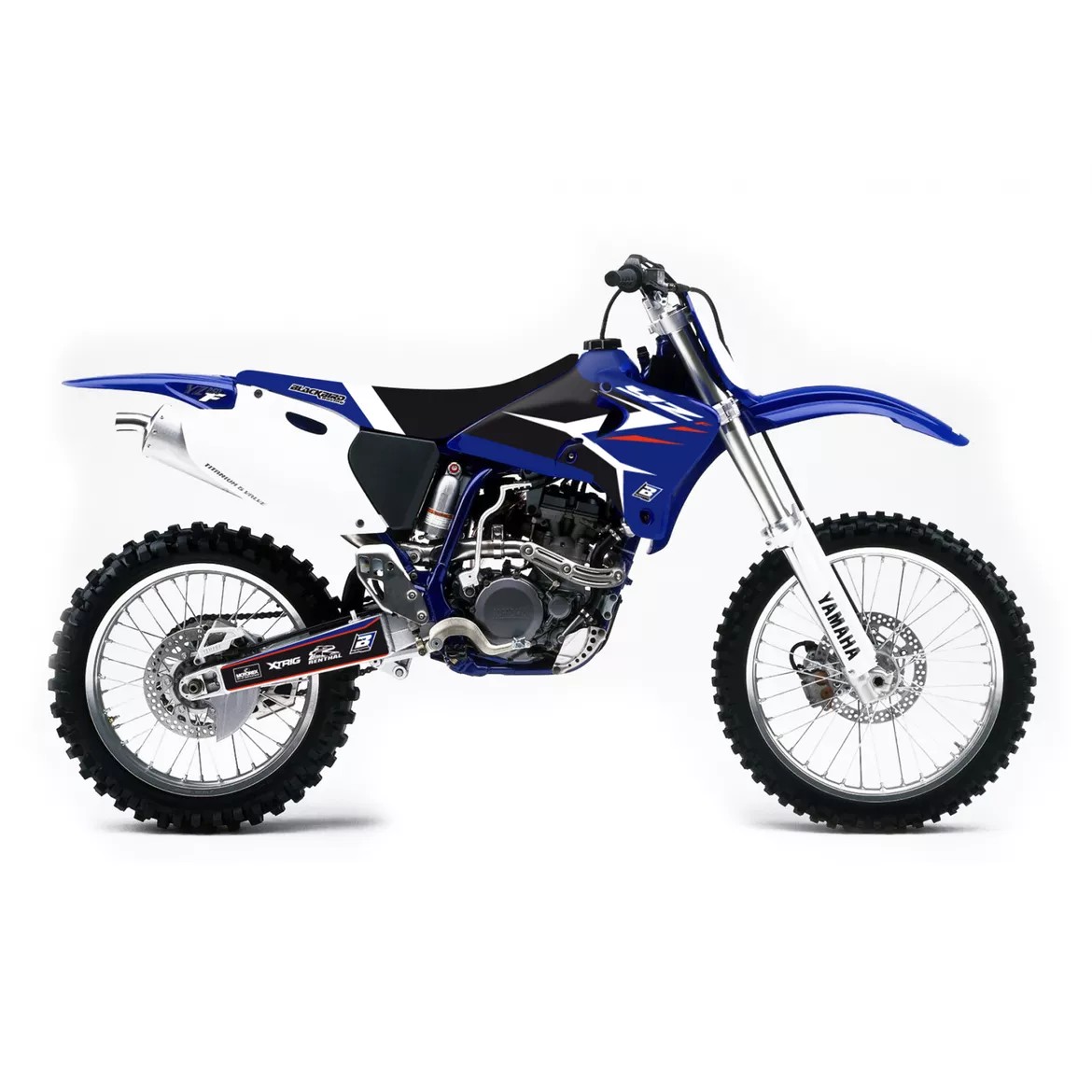
2001 Yamaha YZ426F
General Specifications
| Model | Yamaha YZ426F |
| Year | 2001 |
| Category | Motocross |
| Engine Type | Liquid-cooled, four-stroke, single-cylinder, DOHC, 5-valve |
| Weight | Approximately 113 kg (249 lb) dry |
Engine
| Displacement | 426 cc |
| Bore x Stroke | 95.0 x 60.1 mm |
| Compression Ratio | 12.5:1 |
| Fuel System | Keihin FCR 39 mm flat-slide carburettor with accelerator pump | Replacement Options |
| Ignition | CDI |
| Spark Plug | NGK CR8E |
| Spark Plug Gap | 0.7-0.8 mm (0.028-0.031 in) |
| Cooling System | Liquid cooled |
| Starting System | Kick start with manual decompression system |
Transmission
| Transmission | 5-speed constant-mesh |
| Clutch | Wet multi-plate |
| Final Drive | Chain |
Dimensions
| Overall Length | 2,181 mm (85.9 in) |
| Overall Width | 827 mm (32.6 in) |
| Overall Height | 1,303 mm (51.3 in) |
| Wheelbase | 1,481 mm (58.3 in) |
| Ground Clearance | 381 mm (15.0 in) |
| Seat Height | 998 mm (39.3 in) |
| Fuel Capacity | 8.0 litres (2.1 US gal) |
Chassis
Suspension
| Front Suspension | 46 mm KYB inverted telescopic fork with adjustable compression and rebound damping | Fork Oil Levels |
| Front Suspension Travel | 300 mm (11.8 in) |
| Rear Suspension | KYB Monocross single shock with piggyback reservoir, adjustable spring preload, compression and rebound damping |
| Rear Suspension Travel | 315 mm (12.4 in) |
| Fork Oil | Yamaha Suspension Oil 01 or equivalent; fork oil quantity/level is set according to fork service specification and rider setup |
Brakes & Wheels
| Front Brake | Hydraulic single disc, 250 mm |
| Rear Brake | Hydraulic single disc, 245 mm |
| Front Wheel Size | 21 in |
| Rear Wheel Size | 19 in |
Service Data
| Fuel Type | Premium unleaded petrol |
| Premix Information | Not applicable - four-stroke engine |
| Gearbox Oil | Engine and transmission share the same oil supply; SAE 10W-30 or 10W-40 four-stroke motorcycle oil meeting Yamaha specification, approximately 1.5 L after draining and approximately 1.6 L with oil filter replacement |
| Air Filter | Oiled polyurethane foam element |
| Service Notes | Dry-sump lubrication system with oil carried in the frame reservoir. Check oil level using the correct warm-engine procedure. Valve clearance: intake 0.10-0.15 mm; exhaust 0.20-0.25 mm. Manual decompression lever and correct starting procedure are important on the original 2001 model. |
2001 Yamaha YZ426F - Refining the Four-Stroke Motocross Revolution
The 2001 Yamaha YZ426F was an evolutionary update rather than an all-new motorcycle. Yamaha had already made the major change from the original YZ400F to the larger 426 cc YZ426F for 2000, so the 2001 machine continued that basic platform with refinements aimed at making Yamaha's increasingly successful four-stroke motocrosser easier to race and more competitive.
Its 426 cc liquid-cooled DOHC five-valve single retained the 95.0 x 60.1 mm bore and stroke and high 12.5:1 compression ratio. Fuel was supplied by a Keihin FCR flat-slide carburettor, a component whose condition and setup have a major influence on how these bikes start and respond today. Owners dealing with a worn original carburettor can consult the MXOwners carburettor replacement and reference information.
The 2001 YZ426F still used the famous manual decompression starting arrangement. Starting one correctly became almost a ritual: position the piston carefully, use the decompression lever to move it just beyond compression, return the kickstarter and then give it a committed kick. Riders familiar only with later automatic-decompression or electric-start four-strokes can find an incorrectly adjusted or poorly maintained YZ426F surprisingly difficult to start.
KYB suspension provided approximately 300 mm of travel at the front and 315 mm at the rear, while the conventional motocross wheel combination remained 21 inches front and 19 inches rear. Owners rebuilding the original forks can use the MXOwners fork oil levels and suspension reference, while the motocross tyre size guide can help when comparing modern replacements with the original 80/100-21 and 110/90-19 tyre sizes.
Today the 2001 YZ426F is an important survivor from the period when Yamaha was proving that a four-stroke could compete seriously against established two-stroke motocross machinery. Its weight, starting procedure and carburetted power delivery make it feel distinctly old-school compared with a modern 450, but those characteristics are also a large part of its appeal. For owners, regular oil changes, clean air filtration, correct valve clearances, sound cooling and careful inspection of suspension and chassis bearings are essential to keeping one of these pioneering Yamaha four-strokes healthy.