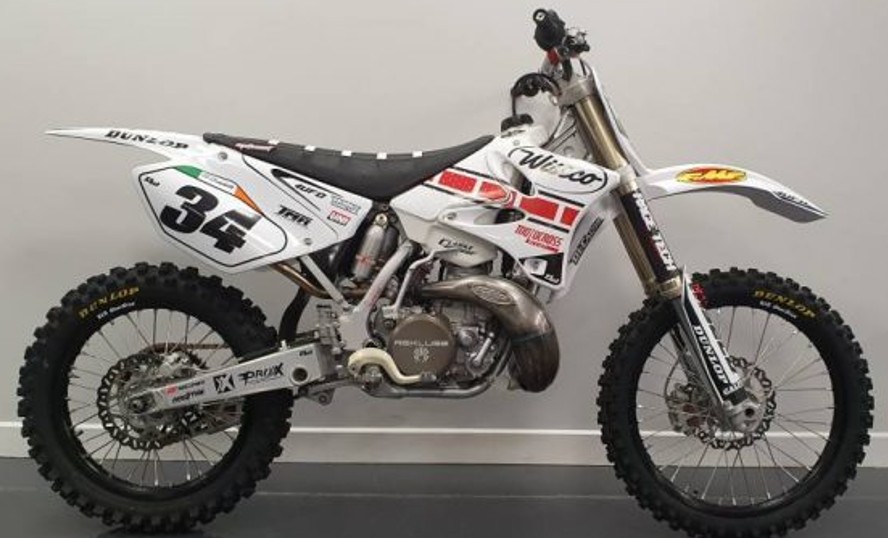
2002 Yamaha YZ250
General Specifications
| Model | YZ250 |
| Year | 2002 |
| Category | Motocross |
| Engine Type | Liquid-cooled, 2-stroke, single-cylinder, piston reed-valve |
| Weight | 96 kg dry |
Engine
| Displacement | 249 cc |
| Bore x Stroke | 66.4 x 72.0 mm |
| Compression Ratio | 8.9-10.6:1 |
| Fuel System | Keihin PWK38S carburettor | Replacement Options |
| Ignition | CDI magneto |
| Spark Plug | NGK BR8EG |
| Spark Plug Gap | 0.5-0.6 mm |
| Cooling System | Liquid-cooled |
| Starting System | Kick starter |
Transmission
| Transmission | 5-speed constant-mesh |
| Clutch | Wet multi-plate |
| Final Drive | Chain |
Dimensions
| Overall Length | 2175 mm |
| Overall Width | 827 mm |
| Overall Height | 1303 mm |
| Wheelbase | 1481 mm |
| Ground Clearance | 385 mm |
| Seat Height | 988 mm |
| Fuel Capacity | 8.0 L |
Chassis
Suspension
| Front Suspension | 46 mm telescopic fork | Fork Oil Levels |
| Front Suspension Travel | 300 mm |
| Rear Suspension | Swingarm, linkage-type Monocross |
| Rear Suspension Travel | 315 mm |
| Fork Oil | Yamaha Suspension Oil 01; standard oil level 135 mm |
Brakes & Wheels
| Front Brake | Hydraulic single disc |
| Rear Brake | Hydraulic single disc |
| Front Wheel Size | 21 inch |
| Rear Wheel Size | 19 inch |
Service Data
| Fuel Type | Premium unleaded petrol |
| Premix Information | Premix lubrication | Premix Calculator |
| Gearbox Oil | 10W-30 motorcycle engine oil, approximately 0.75 L |
| Air Filter | Oiled foam element |
| Service Notes | Competition motorcycle; inspect and service air filter, drive chain, brakes, suspension and engine components regularly |
2002 Yamaha YZ250 – A Major Step Forward for Yamaha’s Two-Stroke
The 2002 Yamaha YZ250 represented a significant development of Yamaha’s 250cc two-stroke motocross platform. Rather than simply carrying over the previous machine with minor detail changes, Yamaha concentrated on reducing weight, improving chassis response and refining the engine package. The result was a noticeably more modern YZ250 and an important step in the evolution of a model that would become one of the longest-lived two-strokes in motocross.
The engine remained a liquid-cooled 249cc single-cylinder two-stroke with a 66.4 mm bore and 72.0 mm stroke, but Yamaha continued refining the way that power was delivered. A Keihin PWK38S carburettor supplied the mixture, working with Yamaha’s power-valve system to provide the broad, hard-hitting performance expected from an open-class two-stroke motocrosser. Owners rebuilding or tuning the fuel system can use the MXOwners carburettor information and replacement options when investigating worn carburettors, jetting or alternative units.
The chassis was a particularly important part of the 2002 development. Yamaha retained steel construction but worked to produce a lighter and more responsive motorcycle. With a dry weight around 96 kg, the YZ250 combined substantial two-stroke power with the agile feel that made 250cc two-strokes so effective on a motocross track. The conventional motocross wheel combination remained, with a 21-inch front and 19-inch rear using 80/100-21 and 110/90-19 tyres. Owners choosing current replacements can compare dimensions using the MXOwners motorcycle tyre size guide.
Suspension continued to be a major part of the YZ250 package. The 46 mm front fork provided approximately 300 mm of travel, while Yamaha’s linkage-type Monocross rear suspension offered approximately 315 mm. On surviving machines, condition is now just as important as the original specification. Old fork oil, worn bushings, leaking seals and neglected linkage bearings can transform the handling of an otherwise healthy motorcycle. Owners servicing the front end can refer to the MXOwners fork oil level reference when checking available fork information.
The YZ250’s mechanical simplicity remains one of its attractions. It used a five-speed constant-mesh transmission, wet multi-plate clutch, chain final drive and conventional kick starting. There was no battery or complicated four-stroke valve train, making routine servicing relatively straightforward for a competent home mechanic. That simplicity still demands regular maintenance, particularly on a competition motorcycle where the air filter, chain, brakes, cooling system, transmission oil and top end operate under demanding conditions.
Correct premix is equally important because the fuel mixture provides lubrication to critical internal engine components. Consistency matters whenever fuel is prepared, especially on a restored bike where the owner may be establishing a new maintenance routine. The MXOwners two-stroke premix calculator can calculate the required oil quantity for different fuel volumes and mixing ratios.
The 2002 YZ250 therefore stands out as more than another annual update. It combined Yamaha’s proven 249cc two-stroke engine concept with meaningful chassis and weight improvements, helping move the YZ250 toward the highly developed machine it would become. For riders and restorers today, it represents an important point in Yamaha’s two-stroke history: modern enough to remain seriously capable, yet simple enough to preserve the direct mechanical character that makes classic YZ250s so appealing.