2003 KTM 125SX
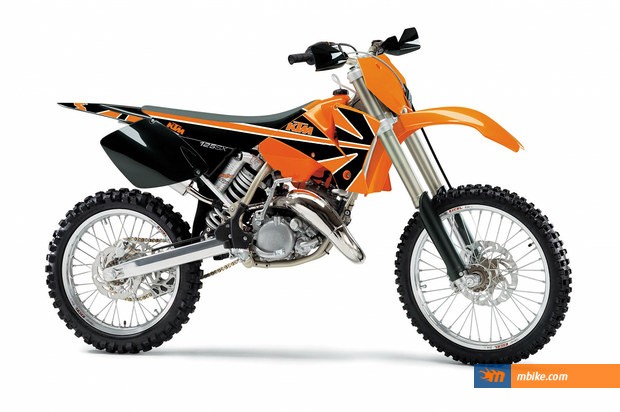
General Specifications
| Model | KTM 125 SX |
| Year | 2003 |
| Category | Motocross |
| Engine Type | Liquid-cooled single-cylinder two-stroke with intake and exhaust control |
| Weight | 92 kg dry, without fuel |
Engine
| Displacement | 124.8 cc |
| Bore x Stroke | 54.0 x 54.5 mm |
| Compression Ratio | |
| Fuel System | Keihin PWK 39 mm flat-slide carburettor | Replacement Options |
| Ignition | Kokusan 2K-1 CDI ignition |
| Spark Plug | NGK BR9EVX |
| Spark Plug Gap | 0.60 mm |
| Cooling System | Liquid cooling; 1.2 L coolant capacity |
| Starting System | Kick starter |
Transmission
| Transmission | 5-speed constant-mesh, claw-actuated manual |
| Clutch | Wet multi-disc clutch, hydraulically operated |
| Final Drive | Chain, 13:50 standard final-drive ratio |
Dimensions
| Overall Length | |
| Overall Width | |
| Overall Height | |
| Wheelbase | 1461 ± 10 mm |
| Ground Clearance | 385 mm unloaded |
| Seat Height | 925 mm unloaded |
| Fuel Capacity | 7.5 L |
Chassis
Suspension
| Front Suspension | WP 4860 MXMA 48 mm upside-down telescopic fork with external preload adjustment | Fork Oil Levels |
| Front Suspension Travel | 300 mm |
| Rear Suspension | WP 5018 PDS Progressive Damping System monoshock with aluminium swingarm |
| Rear Suspension Travel | 335 mm |
| Fork Oil | SAE 5; standard air chamber length 100 mm |
Brakes & Wheels
| Front Brake | 260 mm hydraulic disc, floating caliper |
| Rear Brake | 220 mm hydraulic disc, floating caliper |
| Front Wheel Size | 21 in |
| Rear Wheel Size | 19 in |
Service Data
| Fuel Type | 95 RON unleaded premium petrol mixed with high-quality two-stroke oil |
| Premix Information | 1:40 to 1:60 with high-quality two-stroke oil | Premix Calculator |
| Gearbox Oil | 0.7 L SAE 20W-40 engine oil |
| Air Filter | Washable oiled foam element |
| Service Notes | Competition two-stroke requiring frequent air-filter cleaning, gearbox-oil checks, spark-plug inspection and regular piston, ring, reed and power-valve inspection according to operating hours and race use. |
2003 KTM 125 SX: Five Speeds, Sharper Handling and Factory-Race Influence
The 2003 KTM 125 SX was a significant update rather than a simple graphics-and-jetting revision. The basic 124.8 cc engine architecture remained very close to the 2002 model, but KTM made substantial changes to the gearbox, suspension, chassis setup, hubs and rider ergonomics. By this stage KTM had already established the 125 SX as one of the fastest production 125 two-strokes available, so much of the 2003 development concentrated on making that engine easier to use and giving the chassis the precision to match it.
The most obvious mechanical change was the move from a six-speed gearbox to a five-speed transmission. KTM's factory race programme had already shown that the 125's strong engine could pull wider ratios, and removing sixth gear reduced weight and simplified the transmission. Second gear was widened and strengthened, while a lighter aluminium selector drum with revised shift grooves was introduced to improve shifting under load. The 13:50 final-drive ratio remained typical of the SX setup, and the hydraulically operated wet multi-plate clutch continued to give the KTM a distinctive feel compared with cable-clutch rivals.
The engine itself remained based around the 54.0 x 54.5 mm bore and stroke introduced earlier in the decade. Fuel was supplied by a Keihin PWK 39 mm flat-slide carburettor, and the 125 continued to rely on premixed fuel rather than oil injection. Owners maintaining or rebuilding an original machine can compare replacement choices using the MXOwners carburettor reference, while the two-stroke premix calculator is useful when preparing fuel at KTM's recommended 1:40 to 1:60 ratios.
Suspension and steering received some of the most important updates. The 48 mm WP fork was revised internally with three guide bearings per fork leg to improve control of the inner tubes during compression, along with improved chromium surface treatment to reduce friction. Fork offset was reduced to sharpen steering response. The WP PDS rear shock also received revised oil-flow passages, updated damping and increased oil capacity to improve consistency during long motos. The production bike now offered 300 mm of front-wheel travel and 335 mm at the rear. Owners servicing the forks can use the MXOwners fork oil reference as a starting point when checking oil type and setup.
KTM also strengthened the wheel assemblies. The front axle increased substantially in diameter and the front hub was enlarged, improving front-end rigidity and steering accuracy. The rear hub was reinforced as well. Changes inspired by the factory race bikes included a slightly lower subframe and raised footpegs, altering the rider triangle and giving the 125 SX a more aggressive motocross position. Even the seat foam was softened, addressing a long-running complaint about earlier KTMs.
These updates came during an important period for KTM in American motocross. Grant Langston and Ryan Hughes were racing highly developed factory 125 SX machines, and KTM was using that competition programme to feed ideas back into production. The factory bikes demonstrated just how much performance potential existed in the basic platform, with race versions producing around 40 horsepower while being individually tuned to suit each rider's preferred power delivery and suspension feel.
For owners today, the 2003 KTM 125 SX is an interesting bridge between the earlier hard-edged KTMs and the more polished machines that followed. It retained the brutally effective 125 engine that had made the model famous, but the five-speed gearbox, sharper steering, stronger wheels, revised suspension and improved ergonomics made the whole motorcycle feel more integrated. It was still unmistakably a competition KTM, but by 2003 the Austrian company was no longer simply proving that it could build the fastest engine in the class; it was increasingly building a complete motocross package around it.