
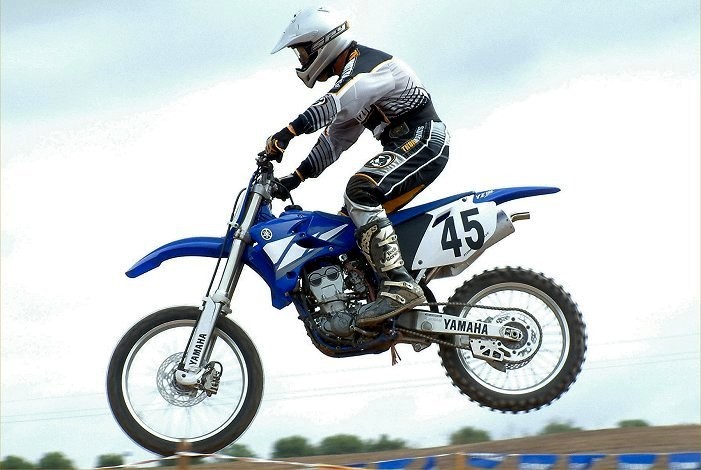
| Model | Yamaha YZ250F |
| Year | 2003 |
| Category | Motocross |
| Engine Type | Liquid-cooled, 4-stroke, DOHC, 5-valve single-cylinder |
| Weight | 101.5 kg with oil and full fuel tank |
| Displacement | 249 cc |
| Bore x Stroke | 77.0 x 53.6 mm |
| Compression Ratio | 12.5:1 |
| Fuel System | Keihin FCR-MX37 flat-slide carburettor with throttle position sensor | Replacement Options |
| Ignition | CDI magneto with direct ignition coil |
| Spark Plug | NGK CR8E |
| Spark Plug Gap | 0.7-0.8 mm (0.028-0.031 in) |
| Cooling System | Liquid cooled |
| Starting System | Kick starter with automatic decompression system |
| Transmission | 5-speed constant-mesh |
| Clutch | Wet multi-plate |
| Final Drive | Chain, 13-tooth front / 48-tooth rear sprocket, 3.692:1 |
| Overall Length | 2,165 mm |
| Overall Width | 827 mm |
| Overall Height | 1,303 mm |
| Wheelbase | 1,475 mm |
| Ground Clearance | 382 mm |
| Seat Height | 995 mm |
| Fuel Capacity | 7.0 L |
| Frame | Steel semi-double-cradle, revised and lightened for 2003 |
| Front Tyre | 80/100-21 51M, tube type | Tyre Size Guide |
| Rear Tyre | 100/90-19 57M, tube type | Tyre Size Guide |
| Front Suspension | 46 mm telescopic fork, coil spring/oil damper | Fork Oil Levels |
| Front Suspension Travel | 300 mm (11.8 in) |
| Rear Suspension | Link-type Monocross swingarm, coil spring/gas-oil damper |
| Rear Suspension Travel | 315 mm (12.4 in) rear wheel travel |
| Fork Oil | Yamaha Suspension Oil 01; 563 cc per fork for USA/CDN/AUS/NZ/ZA specification; standard oil level 140 mm from top with inner tube and damper rod fully compressed and spring removed; adjustable range 80-150 mm |
| Front Brake | Hydraulic single disc |
| Rear Brake | Hydraulic single disc |
| Front Wheel Size | 21 in |
| Rear Wheel Size | 19 in |
| Fuel Type | Premium unleaded petrol, 95 RON or higher |
| Premix Information | Not applicable - 4-stroke engine |
| Gearbox Oil | Engine and transmission share the same dry-sump engine oil supply; 1.0 L periodic oil change, 1.1 L with oil filter replacement, 1.2 L total capacity. Yamaha specified non-friction-modified API SG or higher 4-stroke motorcycle oil, with viscosity selected for ambient temperature. |
| Air Filter | Wet-type foam element |
| Service Notes | 2003 introduced automatic decompression, revised oil circulation and reduced oil capacity. Maintain frequent oil and filter changes, keep the foam air filter clean and correctly oiled, inspect valve clearance regularly and maintain the carburettor hot-start system. Standard tyre pressure is 100 kPa (15 psi) front and rear. |
The 2003 Yamaha YZ250F was the first substantial update to Yamaha's pioneering 250 four-stroke motocrosser since its 2001 introduction. The basic 249 cc five-valve engine architecture and steel-frame concept remained, but Yamaha made extensive changes to reduce weight, improve starting, refine rider ergonomics and increase reliability. The result was a noticeably more developed motorcycle rather than a simple graphics-and-suspension update.
One of the most important changes was the introduction of automatic decompression. The 2001 and 2002 models required the rider to use a manual decompression lever as part of the starting routine, something that became almost a ritual for owners of early YZ-Fs. For 2003 Yamaha incorporated a compact automatic decompression mechanism into the exhaust cam system. Starting still required a healthy kick, but the complicated manual procedure disappeared and the bike became much easier to restart during a race.
The engine retained its 77.0 x 53.6 mm bore and stroke, 12.5:1 compression ratio and Keihin FCR-MX37 carburettor, but Yamaha revised numerous internal details. The crankshaft was strengthened, pumping losses were reduced and the lubrication system was redesigned. Oil capacity dropped significantly to 1.0 litre for a routine change and 1.1 litres with filter replacement. The transmission continued to share the engine's dry-sump oil supply rather than using separate gearbox oil. Owners servicing the original carburettor can compare components and alternatives through the MXOwners carburettor reference.
Weight reduction was pursued throughout the motorcycle. Yamaha revised the main frame, adopted a lighter subframe and swingarm and introduced a direct ignition coil integrated with the spark-plug cap. The completed machine weighed about 101.5 kg with oil and a full fuel tank, making it roughly three kilograms lighter than the previous version despite retaining the same basic four-stroke layout.
The bodywork was also significantly redesigned. A flatter seat-to-tank relationship, slimmer fuel tank, revised side panels and new rear fender gave the rider more freedom to move forward in corners. The fuel tank was reduced to 7.0 litres, contributing to the slimmer feel. These changes helped bring the ergonomics closer to Yamaha's two-stroke YZ motocross bikes and made the YZ250F feel less bulky than the early models.
Suspension remained long-travel competition equipment, with a 46 mm telescopic fork offering 300 mm of front wheel travel and a link-type Monocross rear system providing 315 mm. Yamaha revised the damping settings for 2003 to improve compliance while maintaining the bike's race-focused character. Owners rebuilding the original fork can use the MXOwners fork oil reference when checking oil levels and service information.
The 2003 YZ250F arrived with a strong racing reputation already established. Yamaha's 250 four-stroke had won AMA 125-class Supercross championships in both 2001 and 2002, demonstrating how quickly the four-stroke concept had become competitive against established 125 two-strokes. By 2003 the YZ250F was no longer viewed as an unusual alternative; it was helping define the future direction of the entire class.
For today's owner, the 2003 model is particularly important because many parts differ from the 2001-2002 machines despite the bikes looking broadly related. Automatic decompression components, lubrication-system parts, chassis pieces, bodywork and other model-specific items should be checked carefully when ordering replacements. The MXOwners Parts Finder can help when identifying suitable components, while the standard 80/100-21 front and 100/90-19 rear tyre sizes can be checked against alternatives using the MXOwners Tyre Size Guide.
The 2003 YZ250F therefore represents an important step between the original pioneering machine and the increasingly refined four-strokes that followed. Yamaha kept the basic formula that had already proven successful but addressed weight, starting, reliability and rider movement in a comprehensive way. For collectors and owners, it marks the point where the early YZ250F began evolving from a revolutionary first-generation design into a mature motocross platform.