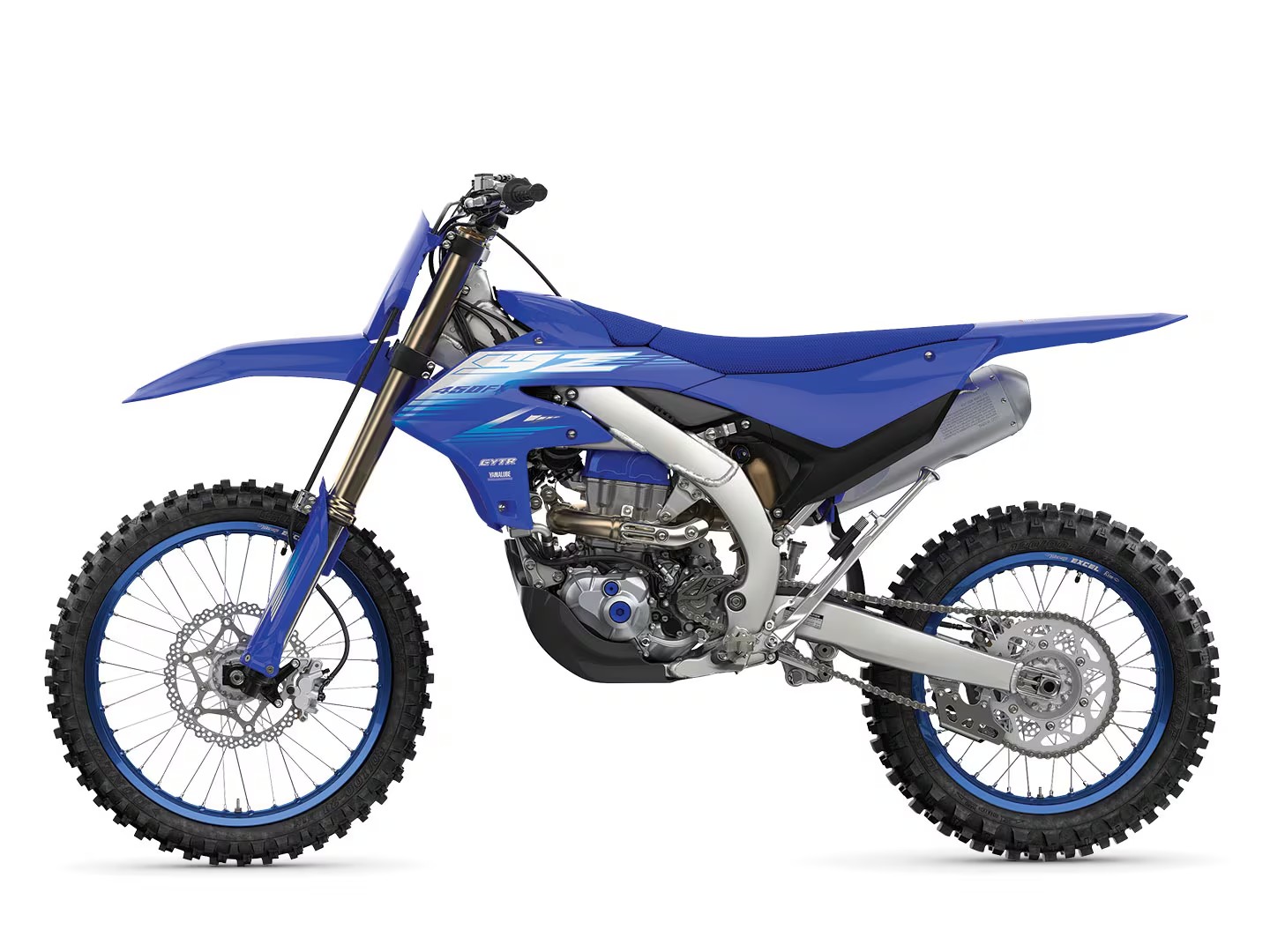
| Model | Yamaha YZ450F |
| Year | 2003 |
| Category | Motocross |
| Engine Type | Liquid-cooled, four-stroke, single-cylinder, DOHC, 5-valve |
| Weight | Approximately 105 kg (231 lb) dry |
| Displacement | 449 cc |
| Bore x Stroke | 95.0 x 63.4 mm |
| Compression Ratio | 12.5:1 |
| Fuel System | Keihin FCR 39 mm flat-slide carburettor with accelerator pump | Replacement Options |
| Ignition | CDI |
| Spark Plug | NGK CR8E |
| Spark Plug Gap | 0.7-0.8 mm (0.028-0.031 in) |
| Cooling System | Liquid cooled |
| Starting System | Kick start with automatic decompression |
| Transmission | 4-speed constant-mesh |
| Clutch | Wet multi-plate |
| Final Drive | Chain |
| Overall Length | 2,184 mm (86.0 in) |
| Overall Width | 827 mm (32.6 in) |
| Overall Height | 1,303 mm (51.3 in) |
| Wheelbase | 1,485 mm (58.5 in) |
| Ground Clearance | 371 mm (14.6 in) |
| Seat Height | 998 mm (39.3 in) |
| Fuel Capacity | 8.0 litres (2.1 US gal) |
| Frame | Steel semi-double-cradle frame |
| Front Tyre | 80/100-21 | Tyre Size Guide |
| Rear Tyre | 110/90-19 | Tyre Size Guide |
| Front Suspension | 46 mm KYB inverted telescopic fork with adjustable compression and rebound damping | Fork Oil Levels |
| Front Suspension Travel | 300 mm (11.8 in) |
| Rear Suspension | KYB Monocross single shock with piggyback reservoir, adjustable spring preload, compression and rebound damping |
| Rear Suspension Travel | 315 mm (12.4 in) |
| Fork Oil | Yamaha Suspension Oil 01 or equivalent; standard fork oil level approximately 135 mm (5.31 in), measured from the top of the fully compressed outer tube with spring removed |
| Front Brake | Hydraulic single disc, 250 mm |
| Rear Brake | Hydraulic single disc, 245 mm |
| Front Wheel Size | 21 in |
| Rear Wheel Size | 19 in |
| Fuel Type | Premium unleaded petrol |
| Premix Information | Not applicable - four-stroke engine |
| Gearbox Oil | Engine and transmission share the same dry-sump oil supply; SAE 10W-30 or 10W-40 four-stroke motorcycle oil meeting Yamaha specification; approximately 1.0 L after draining, 1.1 L with oil filter replacement and 1.2 L after engine disassembly |
| Air Filter | Oiled polyurethane foam element |
| Service Notes | Dry-sump lubrication system with oil reservoir incorporated into the engine rather than the frame. Check oil level using the specified warm-engine procedure. Valve clearance: intake 0.10-0.15 mm; exhaust 0.20-0.25 mm. Automatic decompression replaced the manual decompression starting procedure used on the YZ426F. |
The 2003 Yamaha YZ450F was a major new model and the first motorcycle to carry the YZ450F name. It replaced the YZ426F and represented another important step in the four-stroke motocross revolution Yamaha had started with the YZ400F in the late 1990s. Rather than simply increasing the capacity of the existing 426, Yamaha substantially reworked the engine and motorcycle around the new 449 cc specification, creating a lighter and considerably more aggressive motocross machine.
The new engine displaced 449 cc through a 95.0 mm bore and longer 63.4 mm stroke. Yamaha retained its distinctive DOHC five-valve cylinder head and a high 12.5:1 compression ratio, while a Keihin FCR 39 mm flat-slide carburettor handled fuelling. These carburettors provided extremely direct response when correctly set up, but worn accelerator-pump components, blocked passages and incorrect jetting can cause problems on bikes that are now more than two decades old. Owners working on the original system can consult the MXOwners carburettor replacement and reference information.
One of the most welcome changes was automatic decompression. Earlier YZ400F and YZ426F riders had become accustomed to a specific starting ritual involving a handlebar-mounted decompression lever and careful piston positioning. The 2003 YZ450F's automatic system dramatically simplified the process. It remained kick-start only, but starting a properly tuned 450 no longer required mastering the old YZ426F procedure.
The transmission was another distinctive feature. Yamaha fitted the first YZ450F with a four-speed gearbox rather than the YZ426F's five-speed unit. The broad and extremely strong power delivery allowed Yamaha to use widely spaced ratios intended specifically for motocross racing. It gave the 2003 machine a unique character among YZ450Fs and is one of the easiest ways to distinguish this first generation mechanically from many later versions.
Weight reduction was a major part of the redesign. The YZ426F had been a formidable motorcycle but carried a reputation for feeling heavy. Yamaha removed a substantial amount of weight for the YZ450F while retaining a steel frame. The dry-sump lubrication arrangement was also redesigned so that the oil reservoir was incorporated into the engine rather than using the frame as the oil tank, helping simplify the chassis and centralise mass.
KYB suspension remained central to the chassis package. The 46 mm inverted fork provided approximately 300 mm of travel, while the Monocross rear suspension offered approximately 315 mm. Both ends provided the adjustment expected of a serious competition motocrosser. Owners rebuilding an original front end can consult the MXOwners fork oil levels and suspension reference, while worn linkage, swingarm and steering-head bearings should be checked carefully on any surviving machine using the motorcycle bearing finder when replacement components are required.
The traditional motocross wheel combination remained, with a 21-inch front and 19-inch rear wheel carrying 80/100-21 and 110/90-19 tyres. Modern tyres can transform the behaviour of an older motocrosser, although retaining appropriate dimensions helps preserve the geometry Yamaha designed into the chassis. The MXOwners motocross tyre size guide can help owners compare replacement sizes.
For today's owner, maintenance history matters enormously. The 2003 YZ450F was built as a competition motorcycle, and many examples lived hard lives. Valve clearances, cam-chain condition, oil consumption, clutch and gearbox operation, cooling-system health and air-filter maintenance deserve close attention. The shared engine and transmission lubrication system also means using suitable motorcycle oil and changing it regularly is particularly important.
Historically, the 2003 YZ450F occupies a special position. Yamaha had already demonstrated that four-strokes could win at the highest level, but the first YZ450F pushed the concept toward the 450-class formula that would dominate modern motocross. Its four-speed gearbox, steel frame, carburettor and fierce early-450 power delivery make it very different from today's machines. That raw character is precisely what makes the 2003 model interesting now: it captures the moment when the experimental four-stroke revolution became the 450 motocross era.