| Model | KTM 125 SX |
| Year | 2005 |
| Category | Motocross |
| Engine Type | Liquid-cooled single-cylinder two-stroke with reed-valve induction and exhaust power valve |
| Weight | Approximately 90.4 kg dry, without fuel |
| Displacement | 124.8 cc |
| Bore x Stroke | 54.0 x 54.5 mm |
| Compression Ratio | |
| Fuel System | Keihin PWK 39 mm flat-slide carburettor with reed-valve induction | Replacement Options |
| Ignition | Kokusan CDI ignition |
| Spark Plug | NGK BR9ECMVX |
| Spark Plug Gap | 0.60 mm |
| Cooling System | Liquid cooling |
| Starting System | Kick starter |
| Transmission | 5-speed constant-mesh manual |
| Clutch | Wet multi-disc clutch, hydraulically operated |
| Final Drive | Chain |
| Overall Length | |
| Overall Width | |
| Overall Height | |
| Wheelbase | Approximately 1471 mm |
| Ground Clearance | Approximately 390 mm |
| Seat Height | Approximately 925 mm |
| Fuel Capacity | Approximately 7.5 L |
| Frame | Chrome-molybdenum steel central-tube frame |
| Front Tyre | 80/100-21 | Tyre Size Guide |
| Rear Tyre | 100/90-19 | Tyre Size Guide |
| Front Suspension | WP 48 mm upside-down telescopic fork | Fork Oil Levels |
| Front Suspension Travel | 300 mm |
| Rear Suspension | WP PDS monoshock with aluminium swingarm |
| Rear Suspension Travel | 335 mm |
| Fork Oil | SAE 5 fork oil; air-chamber setting approximately 90 mm |
| Front Brake | 260 mm hydraulic disc |
| Rear Brake | 220 mm hydraulic disc |
| Front Wheel Size | 21 in |
| Rear Wheel Size | 19 in |
| Fuel Type | Premium unleaded petrol, minimum 95 RON, mixed with high-quality two-stroke oil |
| Premix Information | 1:40 to 1:60 depending on oil specification and operating conditions | Premix Calculator |
| Gearbox Oil | Approximately 0.7 L high-quality SAE 15W-50 engine/transmission oil |
| Air Filter | Washable oiled foam element |
| Service Notes | Competition motorcycle requiring frequent air-filter servicing, gearbox-oil changes, spark-plug checks and regular inspection of piston, rings, reeds, power valve, chain and suspension components. |
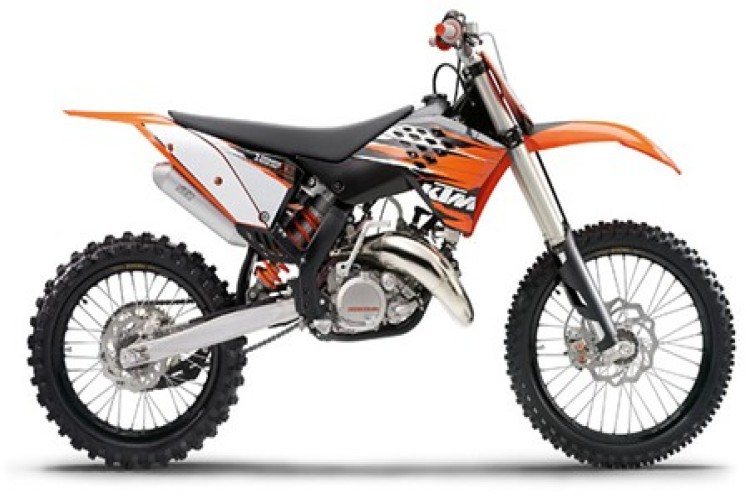
The 2005 KTM 125 SX represented a significant development rather than a simple annual update. KTM retained the basic 124.8 cc two-stroke engine layout that had already made the 125 SX one of the quickest machines in its class, but the surrounding motorcycle was extensively revised. A lighter and more refined chassis, revised suspension and updated ergonomics helped move the 125 SX closer to the balanced motocross package KTM had been chasing throughout the early 2000s.
At the heart of the motorcycle remained KTM's 54.0 x 54.5 mm bore-and-stroke engine. The liquid-cooled single used reed-valve induction, an exhaust power-valve system and a large Keihin PWK 39 mm carburettor. By 2005 this engine architecture was well developed, and KTM concentrated on making its strong midrange and top-end performance easier to exploit rather than replacing the basic design. Owners dealing with worn original carburettors can compare alternatives through the MXOwners carburettor reference.
The five-speed transmission and hydraulic clutch continued from the previous generation. KTM's decision to use five ratios on the 125 had initially seemed unusual in a class traditionally dominated by six-speed gearboxes, but the broad and powerful KTM engine could pull the wider spacing. The hydraulic clutch was also becoming a KTM trademark, providing consistent lever feel even as the clutch became hot during a moto.
Much of the 2005 work focused on the chassis. KTM revised the chrome-molybdenum steel frame and worked to reduce weight while improving rigidity and rider movement. The 125 SX was exceptionally light at roughly 90 kg without fuel, helping it change direction quickly and making it particularly responsive to rider input. Updated bodywork and contact points continued KTM's move away from the taller, more enduro-influenced feel of its late-1990s motocross bikes toward a flatter and more conventional racing position.
Suspension remained WP at both ends. The 48 mm upside-down fork provided about 300 mm of travel, while the linkless WP PDS rear shock delivered approximately 335 mm. KTM continued refining PDS damping in an effort to provide better small-bump compliance without sacrificing resistance to bottoming. Setup was particularly important on these machines, as spring preload, sag and fork height could noticeably alter the handling. Owners rebuilding or returning modified forks to a known baseline can use the MXOwners fork oil reference, while the MXOwners rear suspension reference is useful when identifying rear suspension components and setup information.
The lightweight chassis was matched to strong hydraulic disc brakes, with a 260 mm front rotor and 220 mm rear. Conventional motocross wheel sizes of 21 inches front and 19 inches rear were retained. The 125 SX used premixed fuel, and accurate oil measurement remains important on any high-revving competition two-stroke. The MXOwners premix calculator can be used when preparing fuel at the required ratio.
Historically, the 2005 125 SX came at a time when four-strokes were rapidly taking over motocross racing, particularly after the arrival of highly competitive 250 four-strokes. KTM nevertheless continued serious development of its small-bore two-strokes instead of abandoning them. That decision would prove important, because KTM became one of the manufacturers most closely associated with keeping competitive two-stroke motocross bikes available.
For today's owner, the 2005 KTM 125 SX combines the raw character of an early-2000s racing two-stroke with a chassis that was becoming considerably more sophisticated. It is light, mechanically straightforward and rewarding when kept on the pipe, but suspension setup and regular engine maintenance remain essential. The model marks another important step in KTM's progression from a fast European alternative into one of the dominant manufacturers of modern two-stroke motocross machinery.