| Model | KTM 250 SX-F |
| Year | 2007 |
| Category | Motocross |
| Engine Type | Liquid-cooled single-cylinder four-stroke DOHC, 4 valves |
| Weight | Approximately 98.2 kg without fuel |
| Displacement | 249.51 cc |
| Bore x Stroke | 76.0 x 55.0 mm |
| Compression Ratio | 12.8:1 |
| Fuel System | Keihin FCR-MX 39 mm flat-slide carburettor with accelerator pump | Replacement Options |
| Ignition | Kokusan digital DC-CDI |
| Spark Plug | NGK CR9EKB |
| Spark Plug Gap | 0.70 mm |
| Cooling System | Liquid cooling; approximately 1.2 L coolant capacity |
| Starting System | Kick starter with automatic decompression |
| Transmission | 6-speed constant-mesh manual |
| Clutch | Wet multi-disc clutch, hydraulically operated |
| Final Drive | Chain, 13:48 standard sprocket ratio |
| Overall Length | |
| Overall Width | |
| Overall Height | |
| Wheelbase | 1475 ± 10 mm |
| Ground Clearance | 380 mm |
| Seat Height | 925 mm |
| Fuel Capacity | 8.0 L |
| Frame | Central chrome-molybdenum steel frame |
| Front Tyre | 80/100-21 | Tyre Size Guide |
| Rear Tyre | 110/90-19 | Tyre Size Guide |
| Front Suspension | WP 4860 CC MA 48 mm upside-down closed-cartridge fork | Fork Oil Levels |
| Front Suspension Travel | 300 mm |
| Rear Suspension | WP PDS 5018 DCC monoshock with aluminium swingarm |
| Rear Suspension Travel | 335 mm |
| Fork Oil | SAE 5; 385 ml outer chamber and 195 ml closed cartridge per fork specification |
| Front Brake | 260 mm hydraulic disc with floating caliper |
| Rear Brake | 220 mm hydraulic disc with floating caliper |
| Front Wheel Size | 21 in |
| Rear Wheel Size | 19 in |
| Fuel Type | Premium unleaded petrol, minimum 95 RON |
| Premix Information | Not applicable - four-stroke engine |
| Gearbox Oil | Engine and gearbox share lubrication; approximately 1.1 L fully synthetic JASO MA motorcycle oil, SAE 10W-50 above 5°C or SAE 5W-40 below 5°C |
| Air Filter | Washable oiled foam element |
| Service Notes | Competition four-stroke requiring frequent engine-oil and filter changes, air-filter servicing and regular checks of valve clearance, cam-chain condition, spark plug, clutch, chain and suspension components. |
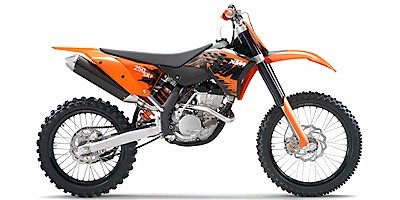
The 2007 KTM 250 SX-F was a significant redesign even though the basic 249.5 cc engine architecture carried over from the bike introduced the previous season. KTM concentrated heavily on the chassis, suspension and ergonomics while also changing the engine's intake, cam timing, ignition and exhaust characteristics. The result was a substantially more complete motocross package and an important step in the rapid development of KTM's 250 four-stroke programme.
The DOHC engine retained its 76.0 x 55.0 mm bore and stroke and 12.8:1 compression ratio. Four valves were operated through finger followers, allowing a compact cylinder head and very high engine speeds. For 2007 KTM revised the intake port, cam profiles, ignition tuning, airbox and exhaust system. The aim was to give the engine stronger roll-on and midrange performance without sacrificing the remarkable top-end power that had already become a hallmark of the SX-F. Fuel delivery remained through a Keihin FCR-MX 39 mm flat-slide carburettor with accelerator pump. Owners maintaining these increasingly old carburetted machines can compare replacement choices through the MXOwners carburettor reference.
The six-speed transmission remained unusual in a class where many rivals used five speeds, but it suited KTM's high-revving engine well. The hydraulically operated wet multi-disc clutch also remained a major KTM advantage, providing light and consistent lever action during long motos. Starting was by kick starter only on the 250 SX-F, with automatic decompression helping the high-compression four-stroke fire more easily.
The larger changes were underneath and around the engine. KTM introduced a substantially revised chrome-molybdenum steel chassis with increased rigidity, a redesigned aluminium swingarm and altered shock positioning. The new structure improved stability and helped the motorcycle track straighter through rough sections while also sharpening cornering. KTM also reshaped the bodywork so the rider could grip the bike more effectively with the knees, an important detail when controlling a lightweight 250F at race pace.
Suspension represented a major technical step. The 2007 250 SX-F received a WP 4860 CC MA 48 mm closed-cartridge fork, replacing the previous open-cartridge design. The closed-cartridge system separated the damping circuit from the outer fork oil and provided more consistent damping under repeated hard impacts. Front-wheel travel was 300 mm, while the WP PDS 5018 rear shock delivered 335 mm without a conventional linkage. Owners rebuilding the fork can use the MXOwners fork oil reference, while the MXOwners rear suspension reference is useful when identifying and understanding the PDS system.
The 2007 chassis also allowed adjustable fork offset through the triple clamps, giving racers another way to alter steering behaviour for different tracks. Strong 260 mm front and 220 mm rear hydraulic disc brakes, a 21-inch front wheel and 19-inch rear completed the competition package. At roughly 98 kg without fuel, the SX-F remained exceptionally light for a four-stroke motocrosser of the period.
Maintenance was demanding by trail-bike standards because the 250 SX-F was designed as a pure competition motorcycle. KTM specified frequent oil and filter servicing, air-filter cleaning and valve-clearance inspection. The engine and gearbox shared approximately 1.1 litres of fully synthetic motorcycle oil, with KTM recommending a JASO MA lubricant such as 10W-50 in normal temperatures. The high-revving engine rewarded careful maintenance but had already demonstrated that it could deliver both strong performance and useful race durability.
Historically, the 2007 250 SX-F helped establish KTM as a serious force in the rapidly expanding 250 four-stroke class. The original engine had already shown impressive potential, but the redesigned chassis and closed-cartridge suspension finally gave it a platform better able to use that performance. KTM was no longer simply offering an alternative to the established Japanese 250Fs; by 2007 it was developing one of the class's most distinctive and competitive motorcycles.