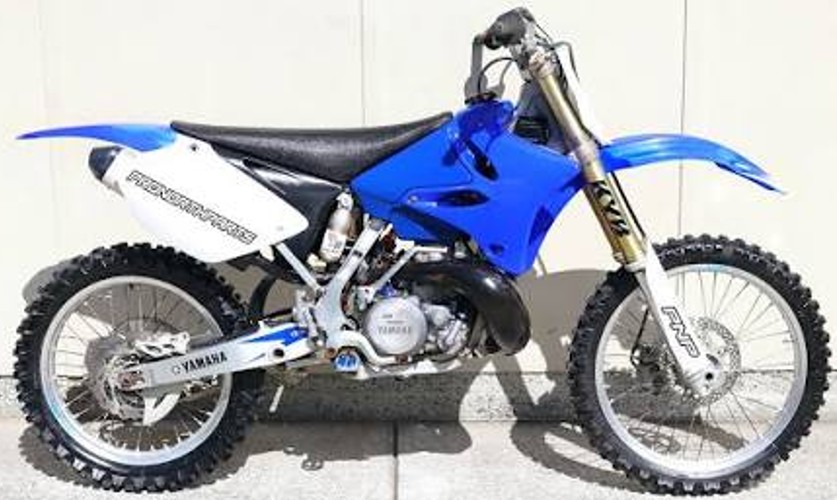
2007 Yamaha YZ250
General Specifications
| Model | Yamaha YZ250 |
| Year | 2007 |
| Category | Motocross |
| Engine Type | Liquid-cooled 2-stroke single-cylinder, reed-valve induction with Yamaha Power Valve System (YPVS) |
| Weight | Approx. 96 kg dry |
Engine
| Displacement | 249 cc |
| Bore x Stroke | 66.4 x 72.0 mm |
| Compression Ratio | 8.9-10.6:1 |
| Fuel System | Keihin PWK38S 38 mm carburettor with reed-valve induction | Replacement Options |
| Ignition | CDI magneto |
| Spark Plug | NGK BR8EG |
| Spark Plug Gap | 0.5-0.6 mm |
| Cooling System | Liquid cooled |
| Starting System | Kickstarter |
Transmission
| Transmission | 5-speed constant-mesh |
| Clutch | Wet multi-plate, coil spring |
| Final Drive | Chain, 14T/50T final gearing |
Dimensions
| Overall Length | 2,179 mm |
| Overall Width | 827 mm |
| Overall Height | 1,307 mm |
| Wheelbase | 1,481 mm |
| Ground Clearance | 383 mm |
| Seat Height | 989 mm |
| Fuel Capacity | 8.0 L |
Chassis
Suspension
| Front Suspension | 48 mm KYB Speed Sensitive System (SSS) inverted twin-chamber fork with adjustable compression and rebound damping | Fork Oil Levels |
| Front Suspension Travel | 300 mm |
| Rear Suspension | KYB link-type Monocross single shock with adjustable spring preload, rebound, low-speed compression and high-speed compression damping |
| Rear Suspension Travel | 315 mm |
| Fork Oil | Yamaha Suspension Oil S1; outer-chamber oil quantity approximately 350 cc per leg with adjustment range around 300-375 cc; inner cartridge/damper approximately 195-205 cc |
Brakes & Wheels
| Front Brake | Hydraulic single disc with twin-piston caliper |
| Rear Brake | Hydraulic single disc |
| Front Wheel Size | 21 x 1.60 in |
| Rear Wheel Size | 19 x 2.15 in |
Service Data
| Fuel Type | Premium unleaded petrol, 95 RON or higher |
| Premix Information | 30:1 petrol-to-2-stroke oil using Yamalube 2-R or equivalent high-quality racing 2-stroke oil | Premix Calculator |
| Gearbox Oil | Yamalube 4 SAE 10W-30 or equivalent motorcycle oil; approximately 0.75 L periodic oil change, 0.80 L total capacity |
| Air Filter | Washable oiled foam air-filter element |
| Service Notes | Competition 2-stroke with premix engine lubrication and separate transmission oil. Maintain the specified premix ratio, clean and oil the air filter frequently, inspect the spark plug and piston regularly, and service the YPVS power-valve system as required. |
2007 Yamaha YZ250: Refining an Already Proven Two-Stroke
The 2007 Yamaha YZ250 was a refinement year rather than a major redesign. Yamaha had made the big chassis change in 2005 with the aluminium frame and followed that with the important KYB Speed Sensitive System suspension update in 2006. For 2007 the company concentrated on detail improvements while leaving the successful basic formula intact.
The 249 cc liquid-cooled two-stroke engine remained fundamentally unchanged, retaining its reed-valve induction, Yamaha Power Valve System and 38 mm Keihin PWK carburettor. That combination had already given the YZ250 a reputation for strong, usable power and crisp throttle response. Owners maintaining the original fuel system can use the MXOwners carburettor reference when checking replacement or repair options.
The aluminium semi-double-cradle frame also carried over, as did the highly regarded 48 mm KYB SSS fork and link-type Monocross rear suspension. By 2007 Yamaha had reached a very polished suspension package, and correct setup remained one of the bike's greatest strengths. Owners servicing the front end can use the MXOwners fork oil reference when checking oil and setup information.
Yamaha continued to specify premix lubrication at 30:1 with Yamalube 2-R or an equivalent high-quality racing two-stroke oil. The five-speed gearbox used a separate oil supply, so transmission oil and premix oil performed completely different jobs. The MXOwners premix calculator can help when preparing accurate fuel mixtures.
Historically, the 2007 model is important less because it introduced something revolutionary and more because it showed how complete the YZ250 package had become. While other Japanese manufacturers were increasingly shifting attention toward four-strokes, Yamaha continued refining its 250 two-stroke. That long-term commitment helped the YZ250 become one of the most enduring motocross motorcycles ever produced.