| Model | Husqvarna TC250 |
| Year | 2010 |
| Category | Motocross |
| Engine Type | Single-cylinder, liquid-cooled, 4-stroke, DOHC, 4 radial titanium valves |
| Weight | 95 kg kerb weight without fuel |
| Displacement | 249.5 cc |
| Bore x Stroke | 79.0 x 50.9 mm |
| Compression Ratio | 13.6:1 |
| Fuel System | Keihin FCR-MX 39 mm flat-slide carburettor with accelerator pump | Replacement Options |
| Ignition | Electronic CDI with digitally controlled variable advance |
| Spark Plug | NGK CR9EB |
| Spark Plug Gap | 0.7-0.8 mm |
| Cooling System | Liquid cooled with centrifugal water pump and twin radiators |
| Starting System | Kick starter with automatic decompressor |
| Transmission | 5-speed constant-mesh manual |
| Clutch | Wet multi-plate, hydraulically operated |
| Final Drive | Chain; 13-tooth front / 50-tooth rear sprockets |
| Overall Length | 2215 mm |
| Overall Width | 820 mm |
| Overall Height | |
| Wheelbase | 1460 mm |
| Ground Clearance | 325 mm |
| Seat Height | 985 mm |
| Fuel Capacity | 7.0 L |
| Frame | Lightweight chromium-molybdenum steel single-tube cradle frame with light-alloy rear subframe |
| Front Tyre | 80/100-21 Pirelli MT32A or Dunlop D756 | Tyre Size Guide |
| Rear Tyre | 100/90-19 | Tyre Size Guide |
| Front Suspension | 48 mm Kayaba AOS upside-down sealed-cartridge hydraulic fork with compression and rebound adjustment | Fork Oil Levels |
| Front Suspension Travel | 300 mm |
| Rear Suspension | Sachs Progressive Soft Damp hydraulic monoshock with linkage, adjustable spring preload, high/low-speed compression and rebound damping |
| Rear Suspension Travel | 296 mm |
| Fork Oil | Kayaba fork oil to factory specification; cartridge oil level approximately 145 mm during service |
| Front Brake | 260 mm fixed wave-type hydraulic disc with floating 2-piston caliper |
| Rear Brake | 240 mm wave-type hydraulic disc with floating caliper |
| Front Wheel Size | 1.60 x 21 in light-alloy rim |
| Rear Wheel Size | 1.85 x 19 in light-alloy rim |
| Fuel Type | 98 RON premium unleaded petrol |
| Premix Information | Not applicable - 4-stroke engine |
| Gearbox Oil | Engine and gearbox share Castrol Power 1 Racing SAE 10W-50; 0.9 L with oil filter replacement or 0.7 L for oil-only change |
| Air Filter | Oiled foam air filter |
| Service Notes | Competition motocross model. Cold valve clearance is 0.15 mm inlet and 0.20 mm exhaust. Change engine oil and filter frequently, clean and oil the air filter after dusty use and regularly inspect the titanium valves, cam chain, piston, clutch, cooling system, drive chain, steering-head bearings, wheel bearings and suspension linkage. |
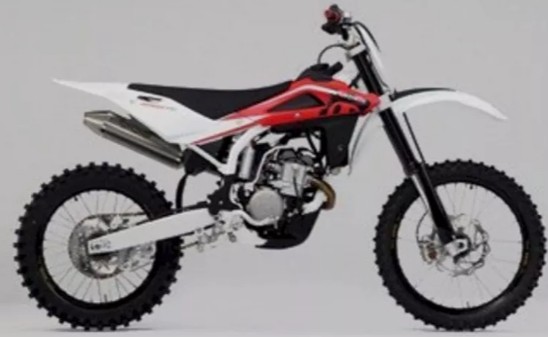
The 2010 Husqvarna TC250 was a major redesign and one of the most important motocross models of Husqvarna's Italian era. Although development versions of the compact X-Light concept had already been seen in competition, the 2010 production TC250 brought the radically smaller engine and purpose-built chassis package to customers. Husqvarna's aim was to remove the size and weight that had held back its earlier 250 four-strokes and build a genuine modern 250F around an exceptionally compact powerplant.
The new X-Light engine displaced 249.5cc but bore little resemblance to the earlier 76 x 55 mm TC250 motor. Bore increased to 79 mm while stroke was shortened dramatically to 50.9 mm, allowing the engine to rev freely. Compression was raised to 13.6:1 and four radially arranged titanium valves were operated by twin overhead camshafts through a combined chain-and-gear drive. The complete engine weighed roughly 22 kg, making compactness and low mass central parts of the TC250's design rather than simply marketing claims.
Unlike the fuel-injected TE enduro version, the motocross TC250 retained a 39 mm Keihin FCR-MX carburettor. The FCR's accelerator pump gave sharp throttle response, but correct jetting and pump adjustment are important on surviving bikes, particularly when hot starting becomes difficult. Owners dealing with worn slides, jets or accelerator-pump components can compare replacement carburettor options when restoring the original induction system.
The X-Light engine was installed in a much lighter steel chassis closely related in concept to Husqvarna's small two-stroke motocross frame. For 2010 the swingarm was shortened by approximately 15 mm to improve rear-wheel traction and help the bike turn more sharply. Revised wheel hubs and axles, new fork clamps and stronger flexible plastics with in-mould graphics were also part of the production package. The result was a TC250 that felt dramatically smaller than the earlier generation.
Another major change was the move from Marzocchi to 48 mm Kayaba AOS sealed-cartridge forks. The Kayabas provided 300 mm of travel with adjustable compression and rebound damping and were paired with a Sachs rear shock controlling 296 mm of wheel movement through Husqvarna's progressive linkage. The switch was important because the Kayaba units were familiar to suspension tuners and provided a strong base for race setup. Owners rebuilding them can use the MXOwners fork oil reference when checking service information.
The braking and wheel package remained conventional for a serious 250F: a 260 mm wave front disc, 240 mm rear disc, 21-inch front wheel and 19-inch rear. Standard tyre dimensions were 80/100-21 and 100/90-19, and riders replacing old competition tyres can compare current sizing through the MXOwners tyre size guide.
Maintenance reflected the engine's highly stressed competition design. Husqvarna specified an NGK CR9EB spark plug with a 0.7-0.8 mm gap and cold valve clearances of 0.15 mm inlet and 0.20 mm exhaust. Engine and gearbox lubrication was shared, with 0.9 litres required when replacing the oil filter. The small oil capacity makes frequent servicing particularly important, as does keeping the foam air filter clean and properly sealed.
Historically, the 2010 TC250 is much more significant than an ordinary model-year update. The compact X-Light engine, new chassis relationship, Kayaba suspension and revised swingarm collectively transformed the machine. It was Husqvarna's serious attempt to put its 250 four-stroke on equal footing with the highly developed Japanese 250Fs rather than relying mainly on European character. For owners today, recognising the X-Light-specific components is important because much of the engine and chassis is fundamentally different from the earlier TC250 generation. The MXOwners Parts Finder can help when identifying components for these distinctive early X-Light machines.