
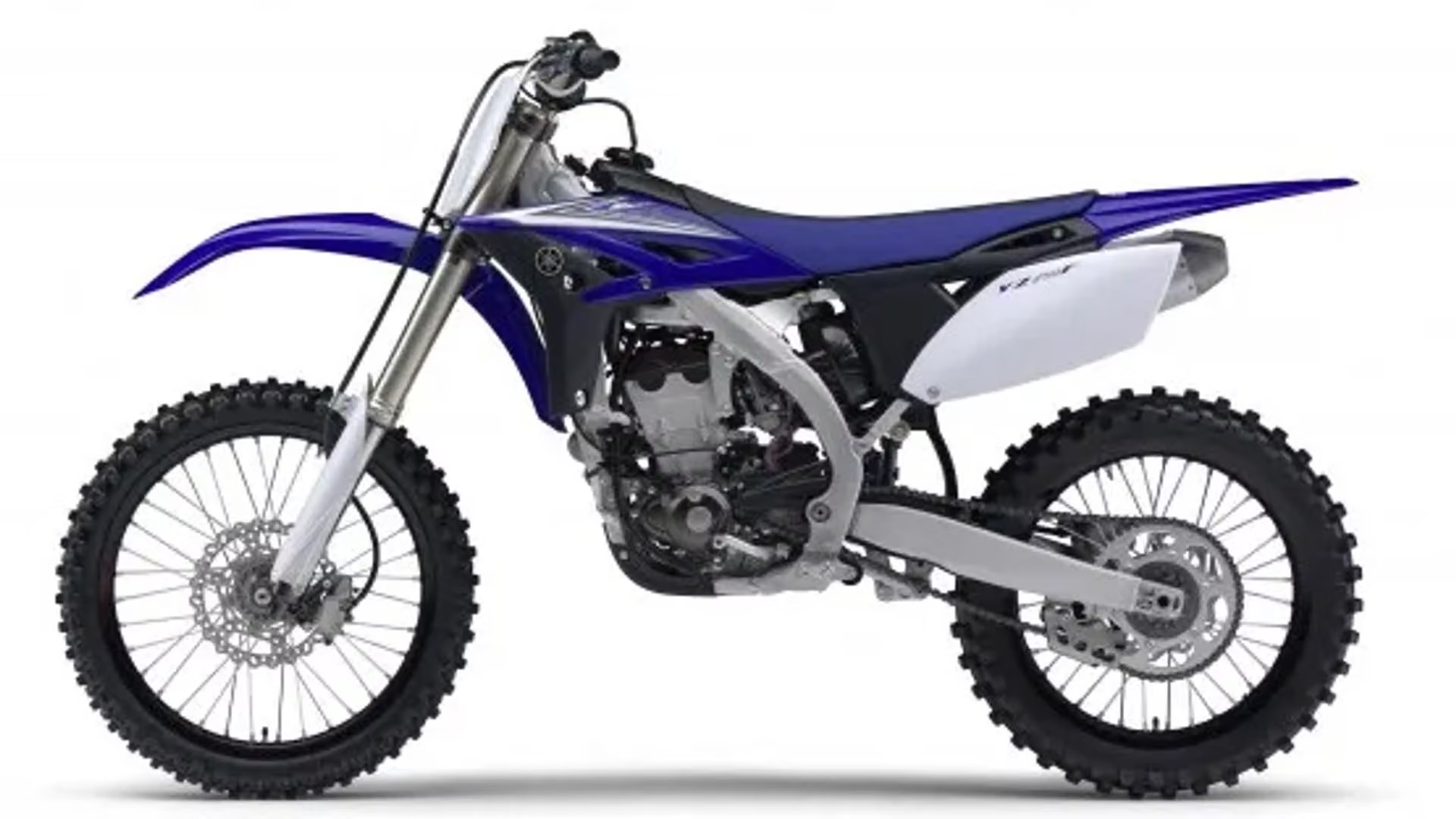
| Model | Yamaha YZ250F |
| Year | 2010 |
| Category | Motocross |
| Engine Type | Liquid-cooled, 4-stroke, DOHC, 5-valve single-cylinder |
| Weight | 102 kg wet (with oil and full fuel tank) |
| Displacement | 249 cc |
| Bore x Stroke | 77.0 x 53.6 mm |
| Compression Ratio | 13.5:1 |
| Fuel System | Keihin FCR-MX37 flat-slide carburettor with throttle position sensor | Replacement Options |
| Ignition | CDI magneto |
| Spark Plug | NGK CR8E |
| Spark Plug Gap | 0.7-0.8 mm (0.028-0.031 in) |
| Cooling System | Liquid cooled |
| Starting System | Primary kick starter with automatic decompression and hot-start system |
| Transmission | 5-speed constant-mesh |
| Clutch | Wet multi-plate |
| Final Drive | Chain |
| Overall Length | 2,169 mm |
| Overall Width | 825 mm |
| Overall Height | 1,306 mm |
| Wheelbase | 1,473 mm |
| Ground Clearance | 378 mm |
| Seat Height | 995 mm |
| Fuel Capacity | 7.0 L |
| Frame | Aluminium bilateral-beam / semi-double-cradle frame, redesigned for 2010 |
| Front Tyre | 80/100-21 51M, tube type | Tyre Size Guide |
| Rear Tyre | 100/90-19 57M, tube type | Tyre Size Guide |
| Front Suspension | 48 mm KYB inverted Speed Sensitive System cartridge fork, fully adjustable | Fork Oil Levels |
| Front Suspension Travel | 300 mm (11.8 in) |
| Rear Suspension | Link-type Monocross with KYB gas/oil shock, adjustable spring preload, high-/low-speed compression and rebound damping |
| Rear Suspension Travel | 310 mm (12.2 in) |
| Fork Oil | Yamaha Suspension Oil S1; KYB twin-chamber fork with separate damper and outer-chamber oil. Use model-specific service quantity and bleeding procedure when rebuilding. |
| Front Brake | Hydraulic single disc, 250 mm |
| Rear Brake | Hydraulic single disc, 245 mm |
| Front Wheel Size | 21 x 1.60 in aluminium spoked wheel |
| Rear Wheel Size | 19 x 1.85 in aluminium spoked wheel |
| Fuel Type | Premium unleaded petrol |
| Premix Information | Not applicable - 4-stroke engine |
| Gearbox Oil | Engine and transmission share the same engine oil supply; 1.0 L periodic oil change, 1.1 L with oil filter replacement, 1.2 L total capacity. API SG or higher non-friction-modified 4-stroke motorcycle oil. |
| Air Filter | Wet-type foam element |
| Service Notes | Competition-use four-stroke. Yamaha specifies engine oil replacement every third race or 500 km under the service schedule, with valve-clearance inspection at the same interval. Keep the foam air filter clean and correctly oiled, maintain FCR carburettor jetting and accelerator-pump operation, and use the hot-start circuit when restarting a warm engine. |
The 2010 Yamaha YZ250F was a significant redesign rather than a routine yearly update. Yamaha retained the proven carburetted five-valve engine concept, but almost everything surrounding it was reconsidered. A completely redesigned aluminium frame, revised engine position, new bodywork, altered suspension settings and major changes to mass distribution made the 2010 bike the beginning of a new chassis generation.
The biggest change was the aluminium frame. Yamaha replaced the previous design with a new bilateral-beam structure using a combination of cast, forged and extruded aluminium components. The engine was positioned differently within the chassis and the fuel tank and bodywork were reshaped to move mass closer to the centre of the motorcycle. Yamaha's goal was not simply lower weight, but a machine that changed direction more easily and gave the rider a more natural feel when moving forward and rearward on the bike.
Interestingly, Yamaha did not follow the fuel-injection trend with the YZ250F in 2010. The engine still used the Keihin FCR-MX37 flat-slide carburettor, even though fuel injection was becoming increasingly common on four-stroke motocross machinery. The 249 cc DOHC five-valve single retained its 77.0 x 53.6 mm bore and stroke and 13.5:1 compression ratio. Owners maintaining the original fuel system can compare replacement and tuning choices through the MXOwners carburettor reference.
Yamaha nevertheless made numerous engine changes. Intake and exhaust characteristics were revised, ignition and carburettor settings were altered, and the exhaust system was redesigned to suit the new chassis package. The emphasis was on stronger, more usable power through the range rather than simply chasing a higher peak figure. The five-speed transmission remained, as did kick starting with automatic decompression and a manually operated hot-start circuit.
Suspension continued to use Yamaha's well-regarded KYB Speed Sensitive System. The 48 mm inverted twin-chamber fork offered 300 mm of travel, while the linkage-operated Monocross rear suspension provided around 310 mm of rear wheel movement. Both ends were reworked to complement the new frame and revised weight distribution. Owners rebuilding the KYB fork can use the MXOwners fork oil reference when checking model-specific service information.
Another useful point for owners is the lubrication system. The engine and five-speed transmission share the same oil supply rather than using separate engine and gearbox compartments. Yamaha specifies approximately 1.0 litre for a routine oil change, 1.1 litres when replacing the oil filter and 1.2 litres total. On a competition four-stroke with a relatively small oil capacity, regular oil changes and a clean air filter are particularly important.
The 2010 redesign also changed the bike's appearance substantially. New radiator shrouds, side panels, seat and fuel-tank shapes created a much flatter rider area, allowing easier movement through corners. The result was a YZ250F that looked and felt noticeably newer even though the basic five-valve engine architecture could trace its roots back to the original 2001 machine.
For owners restoring or maintaining a 2010 model, chassis and body components should not automatically be assumed to interchange with the 2006-2009 bikes. The new frame, mounting arrangement, plastics and suspension details make model-year checking important, and the MXOwners Parts Finder can help when identifying replacement components. Standard tyre sizing remained 80/100-21 front and 100/90-19 rear, which can be compared with modern replacements using the MXOwners Tyre Size Guide.
Historically, the 2010 YZ250F is an interesting transitional model. Yamaha committed to an extensively redesigned chassis while continuing with the carburettor and five-valve engine that had established the YZ250F name. It combined old and new technology in a package that would carry Yamaha's quarter-litre four-stroke through the final years before the model eventually adopted fuel injection and an even more radical engine layout.