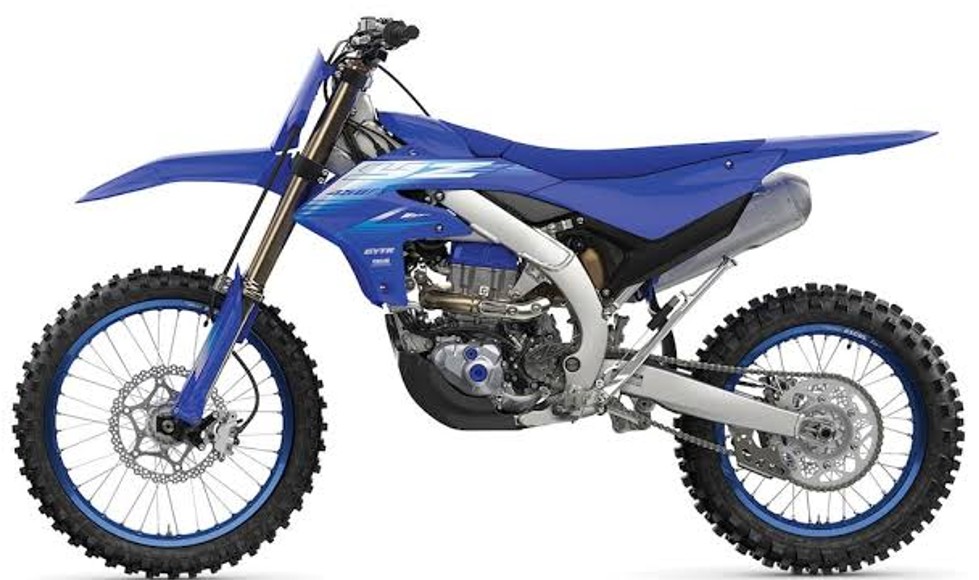
2012 Yamaha YZ250
General Specifications
| Model | Yamaha YZ250 |
| Year | 2012 |
| Category | Motocross / Competition Off-Road |
| Engine Type | Liquid-cooled, single-cylinder, 2-stroke, reed-valve induction with Yamaha Power Valve System (YPVS) |
| Weight | 103 kg (227 lb) wet / approximately 96 kg dry |
Engine
| Displacement | 249 cc |
| Bore x Stroke | 66.4 x 72.0 mm |
| Compression Ratio | 8.9–10.6:1 |
| Fuel System | Keihin PWK38S, 38 mm flat-slide carburettor with reed-valve induction | Replacement Options |
| Ignition | CDI magneto ignition |
| Spark Plug | NGK BR8EG |
| Spark Plug Gap | 0.5–0.6 mm (0.020–0.024 in) |
| Cooling System | Liquid-cooled, twin radiators; coolant capacity approximately 1.20 L |
| Starting System | Kick starter |
Transmission
| Transmission | 5-speed constant-mesh manual |
| Clutch | Wet, multi-plate, cable-operated |
| Final Drive | Chain drive; standard gearing 14T front / 50T rear (3.571:1) |
Dimensions
| Overall Length | 2,178 mm (Australia / USA specification) |
| Overall Width | 827 mm |
| Overall Height | 1,306 mm (Australia / USA specification) |
| Wheelbase | 1,481 mm |
| Ground Clearance | 382 mm (Australia / USA specification) |
| Seat Height | 994 mm (Australia / USA specification) |
| Fuel Capacity | 8.0 litres |
Chassis
Suspension
| Front Suspension | 48 mm KYB upside-down Speed Sensitive System (SSS) twin-chamber cartridge forks, adjustable compression and rebound damping | Fork Oil Levels |
| Front Suspension Travel | 300 mm (11.8 in) |
| Rear Suspension | KYB gas/oil-damped Monocross linkage shock with adjustable spring preload, compression and rebound damping |
| Rear Suspension Travel | 315 mm (12.4 in) |
| Fork Oil | Yamaha Suspension Oil S1. KYB twin-chamber forks: inner damper approximately 199 mL per leg; outer chamber standard 330 mL per leg, adjustable from 300–375 mL. Inner and outer chamber quantities are separate. Confirm settings against the correct regional service manual. |
Brakes & Wheels
| Front Brake | Hydraulic single disc, 250 mm rotor, twin-piston caliper |
| Rear Brake | Hydraulic single disc, 245 mm rotor, single-piston caliper |
| Front Wheel Size | 21 x 1.60-inch aluminium spoked rim |
| Rear Wheel Size | 19 x 2.15-inch aluminium spoked rim |
Service Data
| Fuel Type | Premium unleaded petrol, minimum 95 RON, mixed with suitable 2-stroke oil |
| Premix Information | 30:1 petrol-to-oil ratio using Yamaha Yamalube 2-R or suitable equivalent 2-stroke oil. Approximately 33.3 mL oil per litre of petrol | Premix Calculator |
| Gearbox Oil | Yamalube SAE 10W-40, API SG or higher, JASO MA. Periodic transmission oil change: 0.75 L (750 mL). Total transmission oil capacity: 0.80 L (800 mL). |
| Air Filter | Reusable, oil-treated foam air-filter element |
| Service Notes | The 2012 YZ250 was mechanically carried over from the 2011 model, with revised graphics. Inspect the air filter, transmission oil, drive chain, brakes and coolant regularly. Check piston and piston-ring condition, reed valves and YPVS operation according to competition operating hours. Maintain the specified 30:1 premix ratio and correct carburettor jetting for altitude and temperature. Spark plug tightening torque: 20 Nm. Check fork seals, suspension linkage bearings, steering-head bearings and wheel bearings regularly. Original equipment and regional jetting specifications may vary. |
2012 Yamaha YZ250 – Another Year for Yamaha's Legendary Two-Stroke
The 2012 Yamaha YZ250 arrived at a time when most manufacturers were concentrating their motocross development efforts on four-stroke machinery. Rather than introducing a redesigned motorcycle, Yamaha continued with its proven 249cc two-stroke platform. Compared with the 2011 model, the 2012 YZ250 received essentially new graphics, making it one of the most familiar motorcycles in Yamaha's competition range.
The motorcycle's aluminium frame dated back to the significant 2005 redesign, while its highly regarded Kayaba Speed Sensitive System suspension had been introduced in 2006. Together, these developments established the foundation that Yamaha continued using for many years. The 2012 model retained the responsive power delivery, relatively light construction and predictable handling that made the YZ250 popular with experienced motocross riders.
Power came from the familiar liquid-cooled 249cc engine, equipped with Yamaha's Power Valve System and a 38 mm Keihin PWK carburettor. The engine delivered the immediate throttle response and distinctive power characteristics associated with a competition two-stroke. Unlike modern fuel-injected motorcycles, carburettor tuning remained an important part of ownership, particularly when riding in different temperatures or at different elevations. The MXOwners carburettor reference and replacement options can help owners investigating fuel-system components.
Suspension remained one of the YZ250's strongest features. Its 48 mm KYB SSS forks provided 300 mm of travel, while the rear Monocross system offered 315 mm. Correct spring rates, damping adjustments and fresh suspension oil could make a substantial difference to the motorcycle's handling. Owners servicing their forks can consult the MXOwners fork oil information guide for additional maintenance information.
For present-day owners, the 2012 YZ250 offers the advantages of an established design with strong aftermarket support. Regular piston inspections, clean air filters, fresh gearbox oil and properly maintained suspension remain essential. Replacement components can be investigated through the MXOwners motorcycle parts finder. Although it introduced few changes, the 2012 YZ250 helped preserve Yamaha's two-stroke motocross tradition during an era increasingly dominated by four-strokes.