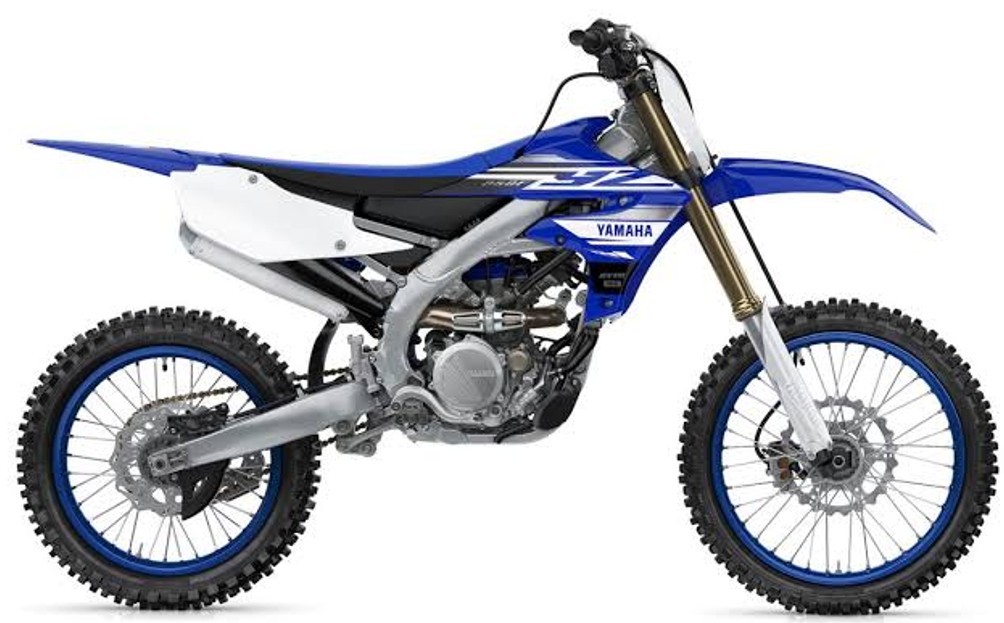
2019 Yamaha YZ250
General Specifications
| Model | Yamaha YZ250 |
| Year | 2019 |
| Category | Motocross / Competition Off-Road |
| Engine Type | Liquid-cooled, single-cylinder, 2-stroke, reed-valve induction with Yamaha Power Valve System (YPVS) |
| Weight | 103 kg (227 lb) wet / curb weight |
Engine
| Displacement | 249 cc |
| Bore x Stroke | 66.4 x 72.0 mm |
| Compression Ratio | 8.9–10.6:1 |
| Fuel System | Keihin PWK38S, 38 mm flat-slide carburettor with throttle-position sensor and reed-valve induction | Replacement Options |
| Ignition | CDI magneto ignition |
| Spark Plug | NGK BR8EG (resistor type) |
| Spark Plug Gap | 0.5–0.6 mm (0.020–0.024 in) |
| Cooling System | Liquid-cooled, twin radiators; total coolant capacity 1.20 L |
| Starting System | Kick starter |
Transmission
| Transmission | 5-speed constant-mesh, close-ratio manual |
| Clutch | Wet, multi-plate, cable-operated |
| Final Drive | Chain drive; standard gearing 14T front / 50T rear (3.571:1) |
Dimensions
| Overall Length | 2,185 mm (86.0 in) |
| Overall Width | 825 mm (32.5 in) |
| Overall Height | 1,290 mm (50.8 in) |
| Wheelbase | 1,485 mm (58.5 in) |
| Ground Clearance | 360 mm (14.2 in) |
| Seat Height | 970 mm (38.2 in) |
| Fuel Capacity | 8.0 litres (2.1 US gal) |
Chassis
| Frame | Aluminium semi-double-cradle frame with removable aluminium rear subframe |
| Front Tyre | 80/100-21 51M, tube type | Tyre Size Guide |
| Rear Tyre | 110/90-19 62M, tube type | Tyre Size Guide |
Suspension
| Front Suspension | 48 mm KYB upside-down Speed Sensitive System (SSS) twin-chamber coil-spring cartridge forks, adjustable compression and rebound damping | Fork Oil Levels |
| Front Suspension Travel | 300 mm (11.81 in) |
| Rear Suspension | KYB gas/oil-damped Monocross linkage shock with adjustable spring preload, high-speed and low-speed compression damping and rebound damping |
| Rear Suspension Travel | 315 mm (12.40 in) rear wheel travel; shock absorber stroke 131.5 mm |
| Fork Oil | Yamaha Suspension Oil S1. Total specified fork oil capacity: 515 mL (17.41 US oz) per leg. KYB twin-chamber service procedure: fill the inner damper initially with 205 mL (6.93 US oz), bleed the damper and discharge excess oil as specified. Outer chamber standard quantity approximately 320 mL per leg. Inner and outer chambers are serviced separately; the initial damper filling quantity is not the final retained quantity. Follow the 2019 service manual when rebuilding the forks. |
Brakes & Wheels
| Front Brake | Hydraulic single disc, 270 mm rotor, twin-piston caliper |
| Rear Brake | Hydraulic single disc, 245 mm rotor, single-piston caliper |
| Front Wheel Size | 21 x 1.60-inch aluminium spoked rim |
| Rear Wheel Size | 19 x 2.15-inch aluminium spoked rim |
Service Data
| Fuel Type | Premium unleaded petrol, minimum 95 RON, premixed with suitable competition-grade 2-stroke oil |
| Premix Information | 30:1 petrol-to-oil ratio using Yamaha Yamalube 2-R or equivalent competition-grade 2-stroke oil. Approximately 33.3 mL oil per litre of petrol. Follow Yamaha's separate break-in mixture instructions when applicable | Premix Calculator |
| Gearbox Oil | Yamalube SAE 10W-40 motorcycle oil, API SG or higher, JASO MA. Periodic transmission oil change: 0.75 L (750 mL). Total transmission oil capacity: 0.80 L (800 mL). |
| Air Filter | Reusable, oil-treated foam air-filter element |
| Service Notes | The 2019 YZ250 was substantially carried over from the 2018 model, with updated graphics. The established aluminium chassis, 249cc two-stroke engine, five-speed transmission and KYB SSS suspension remained unchanged in basic design. Maintain the specified 30:1 premix ratio and adjust carburettor jetting for temperature, altitude and fuel conditions. Spark plug: NGK BR8EG with 0.5–0.6 mm gap. Inspect piston, rings, reed valves and YPVS components according to Yamaha's competition maintenance schedule. Change transmission oil regularly; Yamaha's competition schedule specifies attention after each race, approximately 2.5 operating hours. Clean and oil the foam air filter after dusty riding. Check fork seals, steering-head bearings, suspension linkage bearings, wheel bearings, coolant, brake pads and spoke tension. Standard drive-chain slack: 48–58 mm, measured using Yamaha's specified procedure. Use DOT 4 brake fluid. The YZ250 motocross model differs from the YZ250X cross-country model in transmission ratios, suspension settings and equipment. Confirm the model code and fitted components when ordering replacement parts. |
2019 Yamaha YZ250 – A Proven Two-Stroke in a Changing Motocross World
The 2019 Yamaha YZ250 continued one of motocross racing's longest-running two-stroke traditions. While Yamaha introduced a substantially redesigned YZ250F four-stroke for 2019, the familiar YZ250 two-stroke received updated colours and graphics rather than significant mechanical changes. Its proven 249cc engine, aluminium frame and Kayaba suspension continued largely unchanged from the previous year.
The motorcycle's engineering heritage stretched back to Yamaha's aluminium-frame redesign in 2005 and the introduction of KYB Speed Sensitive System suspension in 2006. Updated bodywork and suspension refinements arrived in 2015, but Yamaha deliberately retained the established engine design. By 2019, the YZ250 had become an attractive alternative for riders who valued mechanical simplicity, lively power delivery and traditional two-stroke performance.
The liquid-cooled engine retained Yamaha's Power Valve System, a 38 mm Keihin PWK carburettor and a five-speed gearbox. Correct jetting and fuel mixture remained essential for reliable performance, especially when riding at different elevations or temperatures. Owners servicing the fuel system can investigate the MXOwners carburettor information and replacement options.
Suspension remained one of the YZ250's most respected features. The 48 mm KYB SSS forks offered 300 mm of travel, while the adjustable rear Monocross system provided 315 mm. Proper maintenance, suitable spring rates and correct damping settings help preserve the handling characteristics that made these motorcycles popular. The MXOwners fork oil reference guide provides additional information for owners planning suspension servicing.
For today's owners, the 2019 YZ250 benefits from extensive aftermarket support and mechanical similarities with surrounding model years. Regular piston inspections, clean air filters, fresh gearbox oil and maintained suspension bearings remain important. Replacement components can